If you could place a degree of difficulty in collecting Whizzers, you would probably start with the H and J kit engines, then work your way up through Pacemaker, Sportsman, Ambassador, S-10 and some of the pre-war models. But certainly one of the most unusual and hard to acquire variants has to be the Martin Roadrunner, which made its debut shortly after World War II and had a limited production run of only a few years.
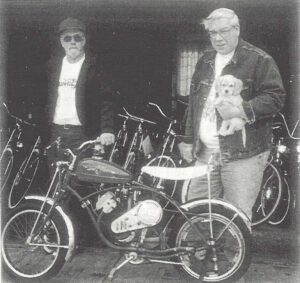
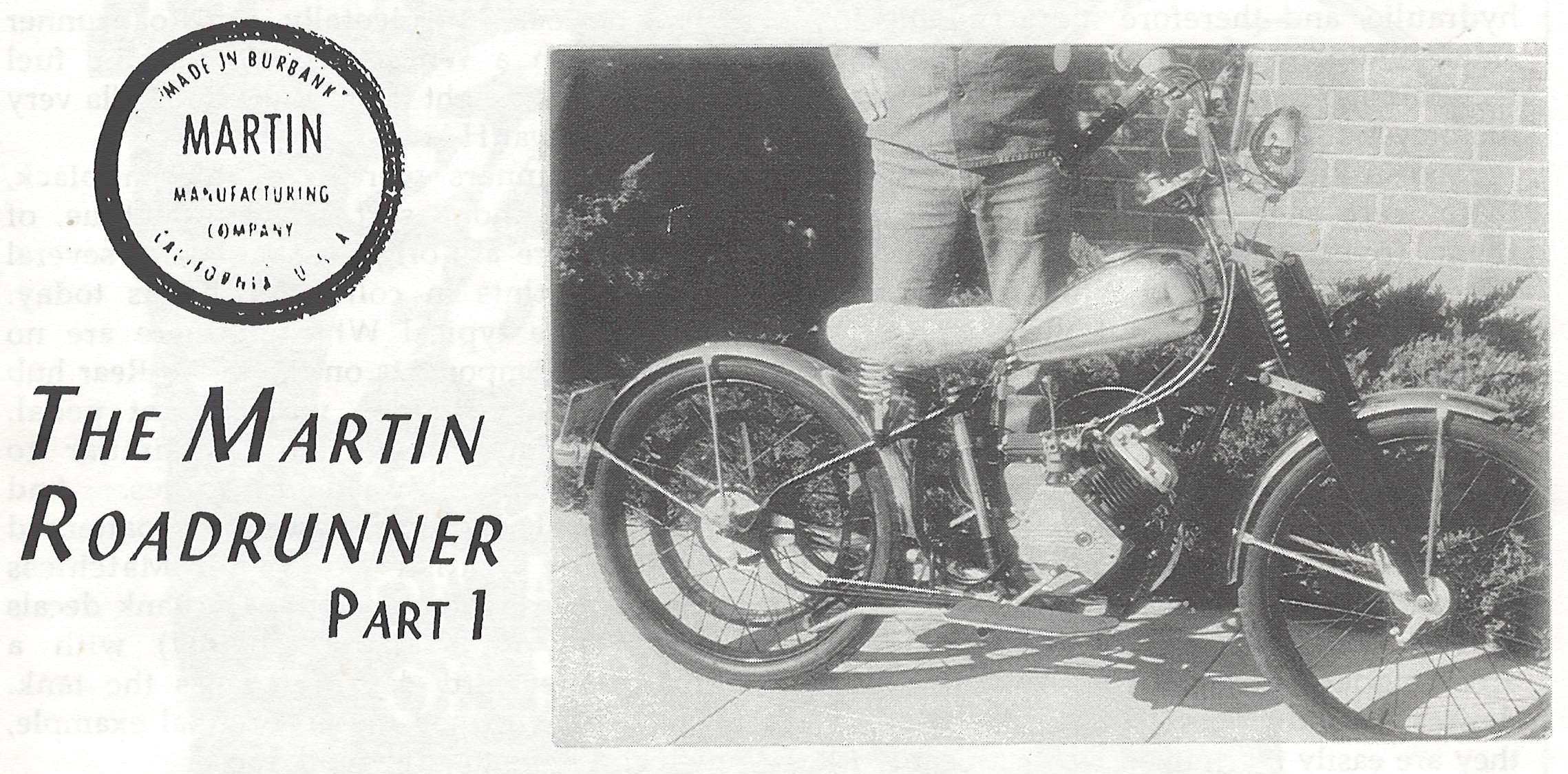
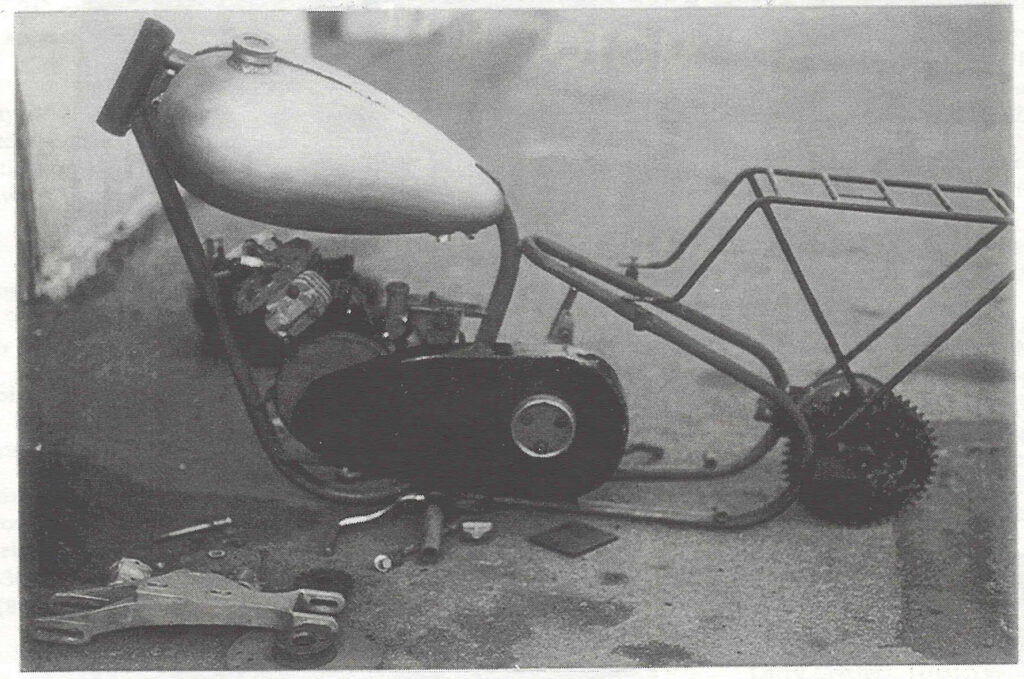
I first saw one about a dozen years ago on a business trip to L.A. when I took some time off to visit with Homer Knapp. Homer was kind enough to invite me to see a collection a few miles from his shop, and we rode over on a couple of his Whizzers. I rode his Roadrunner, shown here, and didn’t realize it at the time — but I got hooked! Ever since then, whenever I’d be looking through my old snapshots, I’d always pause at the Roadrunner and think, what a neat little bike. Low slung, easy to ride, and definitely kind of funky.
Now, fast-forward to February of this year. In calling around, trying to find ideas for this newsletter, I asked Larry Master if he had any information on Martin heads for the OHV article I was working on. Larry said he’d check his files… and Oh, by the way, would I be interested in buying a Martin Roadrunner?
What? Would I? You bet I would. And did. After some fast and furious phone calls and a trip to the bank, I soon found myself driving back from Eastern Pennsylvania with my very own Roadrunner in the back of the truck. (As a friend of mine says, never count your chickens until you’re driving home and the bike is in the back of your truck.)
After burning up the phone lines to North Hollywood, Homer filled me in with a lot more detail on Martin Roadrunners.
Bill Martin worked for Lockheed during the war (home of the P38) and left in 1946 to form the Martin Manufacturing Company in Burbank, Calif., producing motorcycle hoists. The business flourished because the Martin hoists were air operated rather than hydraulic, and therefore more suitable for small shops. Martin soon diversified, recognizing the ready market for small motorcycles immediately following the war.
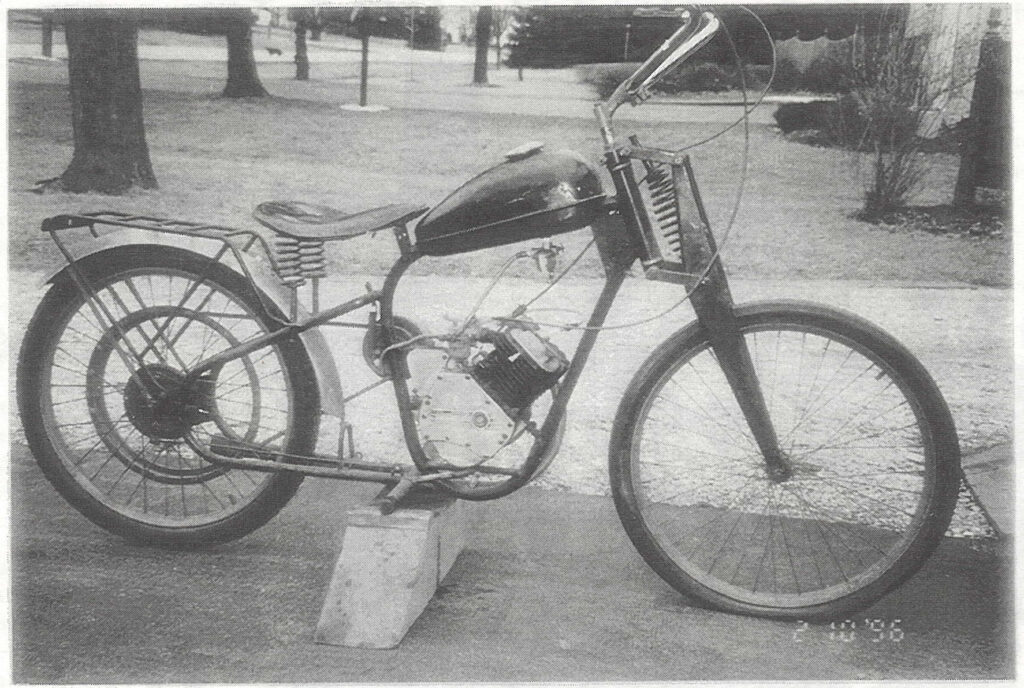
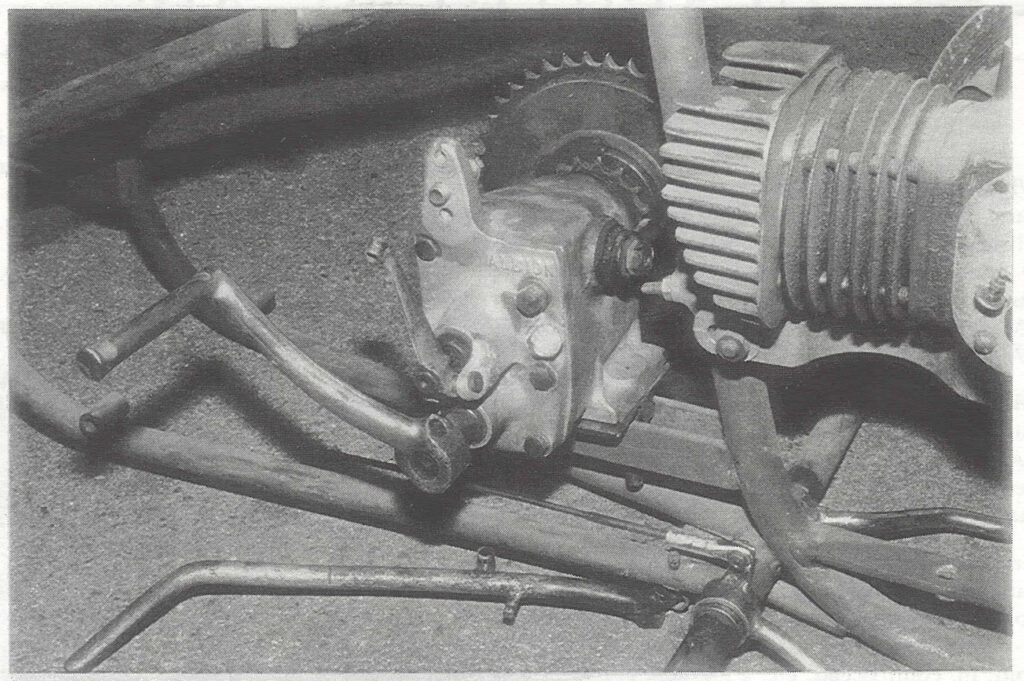
Martin Roadrunners are unusual because there were so many variations. Most of them (over 400, Homer thinks) were powered with H-model Whizzer kits and a standard belt drive. But there were also Marman Twin Roadrunners with chain drives. Albion 2 and 3-speed transmission models. A rope-start Briggs & Stratton version on a flat mounting plate. And even a rolling chassis with no motor, to which you could attach the motor of your choice.
Roadrunners were sold with 24-inch wheels, but the frame and fork will accommodate 26-inch wheels if the owner desires. About the size of an Ambassador, they are easily recognized by their beam-fork and large vertical spring suspension, similar to the 98cc and 125cc Villieures 2-stroke motorcycles sold at that time. The Whizzer models were push-start of course, because the Whizzer kick-start engine was still a few years down the road.
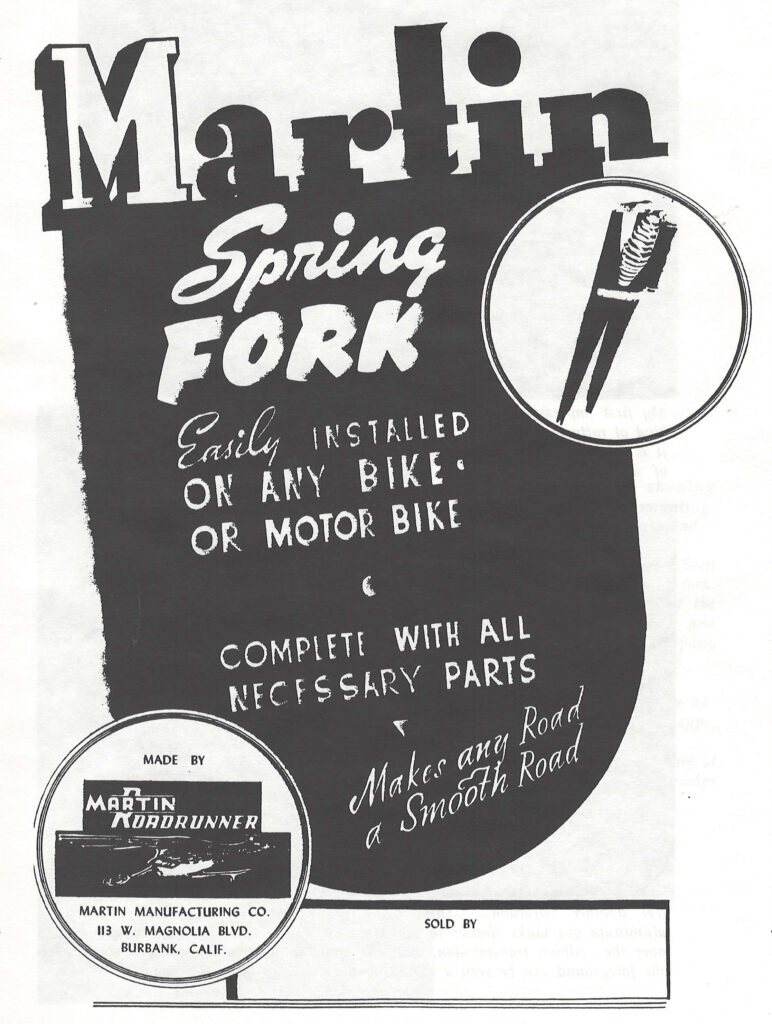
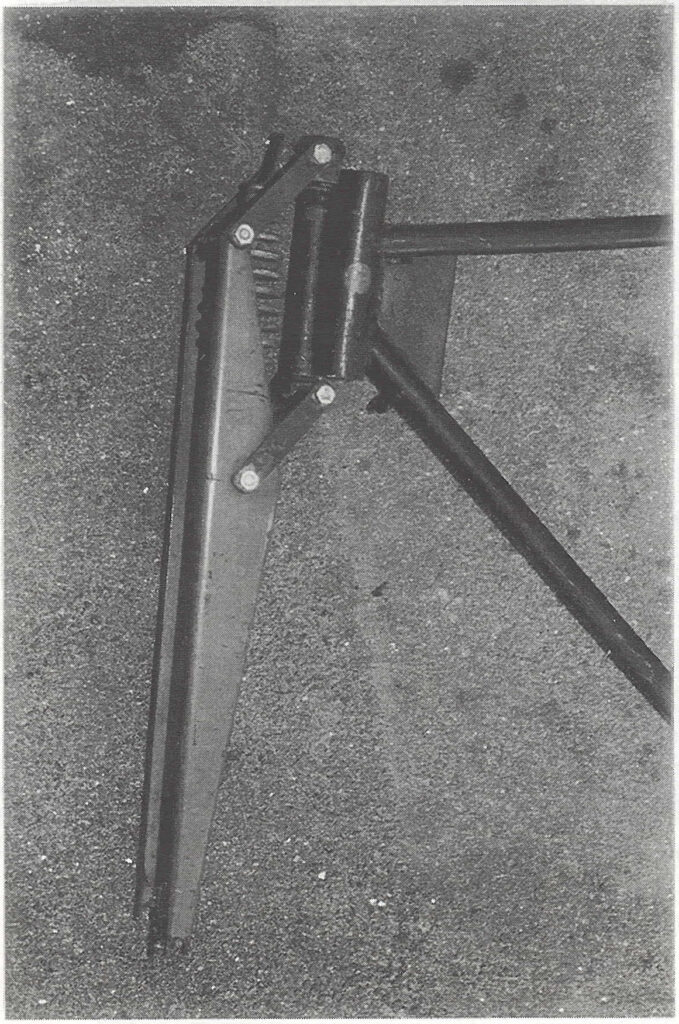
There were also different size frames and forks. The tall head tube, fork and low serial number on my bike indicates it’s a 1946 model. Later models had a smaller fork that was also sold in large numbers to bike shops for 26″ bicycles (see ad on facing page). Other interesting tidbits: Roadrunners had a rather elaborate kick stand that swung off the right side of the bike. As the story goes — Bill Martin did this so the carb wouldn’t drip gas all over the bike if you forgot to turn off the fuel petcock. Incidentally, my Roadrunner came with a Whizzer tank with the fuel outlet on the right front of the tank, a’la very early postwar H-kits.
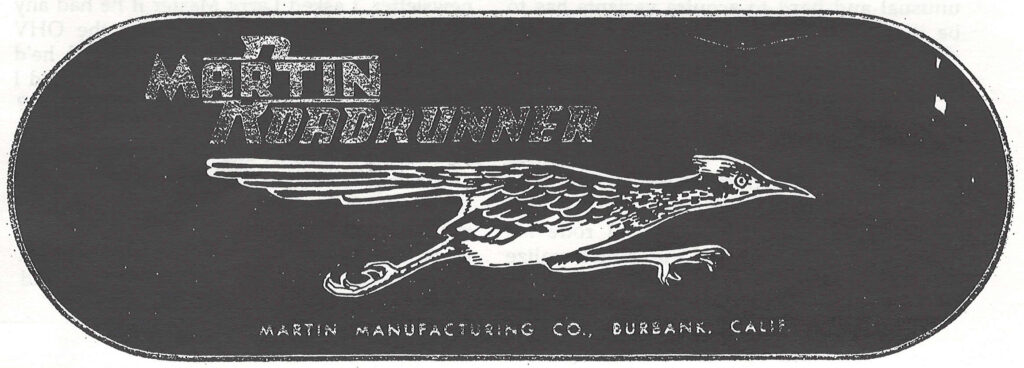
Roadrunners were available in black, burgundy and a sort of medium blue, of which there are original samples of several different tints in collectors’ hands today. Unlike the typical Whizzer, there are no Schwinn components on the bike. Rear hub is generally Simplex with a foot pedal. Aftermarket chrome fenders similar to Walds. Large Messinger saddles. And “riser” style butterfly handlebars patterned after the British AJS and Matchless motorcycles of the periQd. The tank decals are very unusual (see below) with a roadrunner bird dashing across the tank. Homer has loaned me an original example, which I hope to have reproduced.
The Martin Roadrunner was definitely ahead of its time, and who knows what interesting design features might have followed. Tragically, however, Bill Martin was killed in an accident delivering a truckload of motorcycle hoists, and the manufacturing of this unusual bike was discontinued.
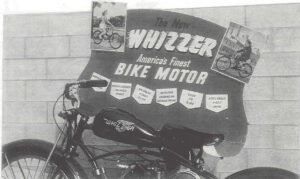
Photos, decals and magazine ad compliments of Homer Knapp.
Next time: Discovering more of the Roadrunner’s idiosyncrasies as I restore my bike.